Creative is the new targeting
With automated audiences on Meta, Google and TikTok, the ad itself tells the algorithm who to show it to. Different concepts reach different people.
Images · Video · UGC & avatars · Voice · Copy
Creative is now the biggest lever in paid ads — and the biggest bottleneck. We’ll teach you a repeatable AI creative workflow that turns research into dozens of on-brand concepts every week, then a testing system that finds the winners.

What’s changed
With automated audiences on Meta, Google and TikTok, the ad itself tells the algorithm who to show it to. Different concepts reach different people.
Feeds move quickly and audiences tire of the same ad. Accounts that refresh concepts regularly tend to hold performance longer.
Image, video, voice and copy tools mean a small team can produce what used to require a studio — if they have a system.
Platforms and regulators increasingly expect disclosure of realistic synthetic media, consent for likenesses and honesty in claims.
What you’ll learn
Mine reviews, comments, support tickets, sales calls and competitor ads with AI to extract pains, desires, objections and the exact words customers use.
Headlines, primary text, hooks, scripts, landing page sections and email follow-ups — generated in batches from a brand voice guide, then human-edited.
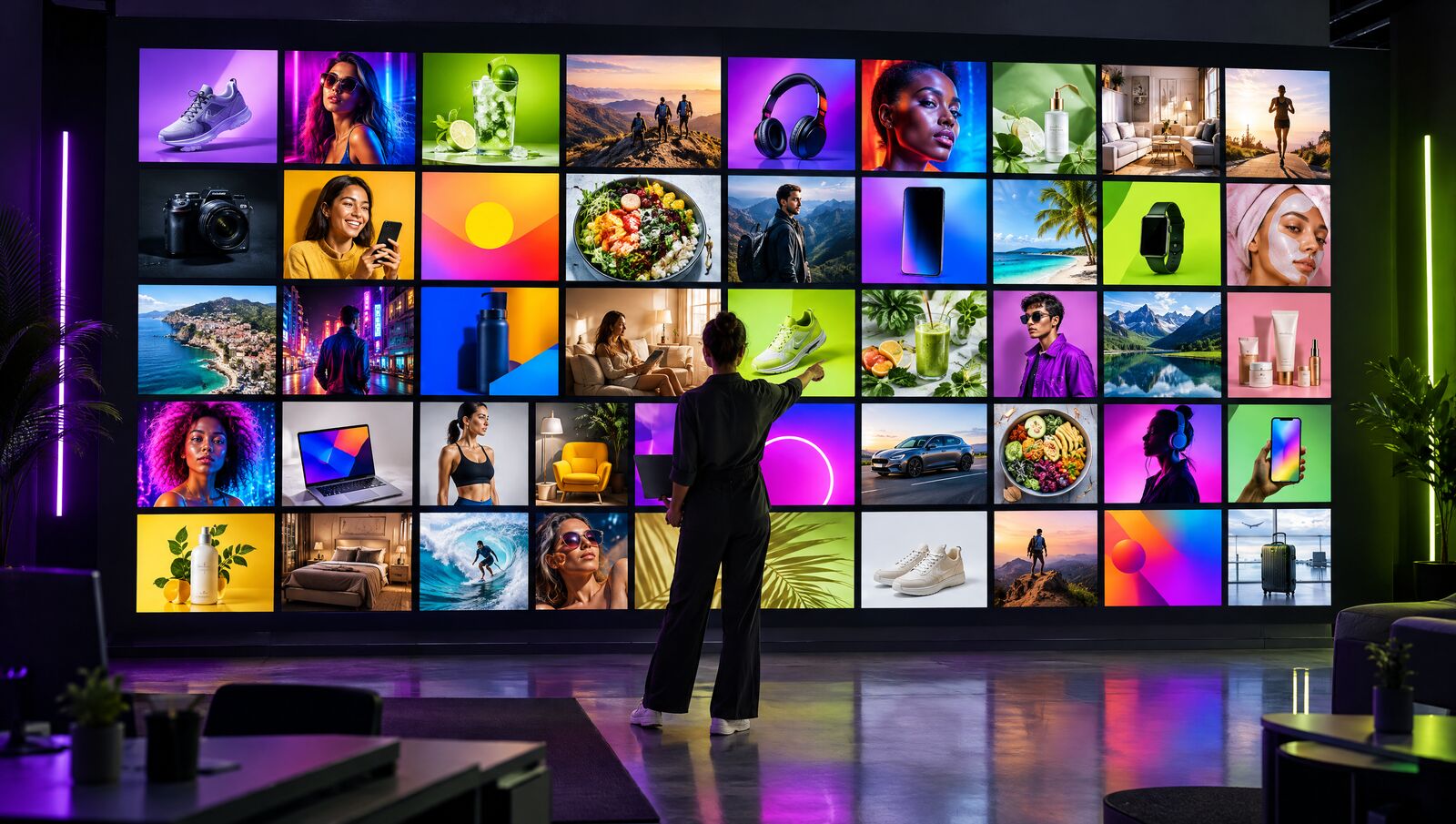
Product-in-context scenes, lifestyle imagery, comparison graphics, testimonial cards, memes and carousels built from your real product photos.
AI-generated B-roll, product motion, text-to-video concepts, animated statics and AI-assisted editing for Reels, TikTok and YouTube.
Creator briefs, AI-assisted UGC editing and, where appropriate, disclosed AI avatar presenters for explainers and localization.
AI voiceovers, consented voice cloning, translation and dubbing so one winning ad can run in multiple languages and markets.
The workflow
A repeatable process that takes you from insight to launched ads in a few focused hours.
Feed AI real inputs — reviews, transcripts, comments, top competitor ads — and extract themes, quotes and objections. Better inputs beat clever prompts.
Cross personas, problems, desires and formats to generate a grid of distinct concepts. Pick the strongest 5–10 for the week based on your testing plan.
Draft hooks, scripts and copy for each concept from your brand voice guide. Write several hooks per concept so you can test openings separately.
Generate or shoot visuals, edit video, add captions and voiceover, and adapt to each placement (1:1, 4:5, 9:16). Use your real product and brand assets as references.
A human checks every asset for accuracy, brand fit, policy compliance, rights and disclosure before launch. No exceptions.
Launch into your testing structure, read results against decision rules and feed learnings — winning hooks, angles and formats — into next week’s sprint.
Creative principles
Quality bar
Brand safety & disclosure
Major platforms have policies and labels for AI-generated or altered content, especially realistic people and events. We teach when and how to disclose on each platform.
Never imitate a real person, celebrity or competitor spokesperson. Use avatars and voice clones only with documented consent and licensed tools.
AI can confidently invent statistics and testimonials. Every claim in an ad must be substantiated, and every testimonial must be real and permissioned.
Check each tool’s commercial-use terms, avoid generating copyrighted characters or trademarks, and keep records of what was generated and how.
Testing
| Test level | What changes | When to use it |
|---|---|---|
| Concept | Persona, angle or core message | Every week — this is where big wins come from |
| Format | Static vs. video vs. carousel vs. UGC | When a concept works, to find its best expression |
| Hook | First line, first frame or headline only | To revive or extend a proven ad cheaply |
| Iteration | Pacing, length, call to action, visual details | On winners, to squeeze more from them |
| Localization | Language, region and cultural cues | When expanding to new markets |
Metrics to watch
| Stage | Metric | What a weak number means |
|---|---|---|
| Attention | Hook rate / thumb-stop rate | The first frame or line isn’t earning a pause |
| Interest | Hold rate, average watch time | The middle drags or the payoff comes too late |
| Intent | CTR, cost per click | The offer or call to action isn’t compelling |
| Action | Conversion rate, CPA, ROAS | Mismatch between ad promise and landing page, or a weak offer |
| Durability | Performance over time vs. frequency | Fatigue — time for new hooks or concepts |
Common mistakes
Where it’s covered
Customer research, angle mapping, brand voice guides and the Hook Matrix.
View curriculumStatic, carousel and copy production with brand style cards.
View curriculumVideo generation, editing, creator workflows, avatars and voice.
View curriculumThe tools we use for each step, and the free alternatives.
See the toolsApply it on Meta, TikTok, YouTube and AI search. Grab free templates in the resource library.
FAQ
They can, when they’re built on real customer insight and pass a human quality bar. AI is best at speed and volume; strategy, taste and accuracy still come from you. Performance always depends on your offer, market and execution.
No. We teach the workflow from scratch, including basic composition, editing and the most common fixes. Designers and editors in the program use it to multiply their output.
Platforms generally evaluate ads on policy compliance and user response, not on whether AI was used. Some require disclosure of realistic synthetic media. We cover each platform’s current rules.
You can start with free and low-cost tools. We show what’s worth paying for at each stage on our AI ad tool stack page.
Sometimes. Avatars work well for explainers, tutorials and localization. For testimonials and personal brands, real people usually build more trust — and avatars must never be used to fake a testimonial.
Next cohort starts January 12, 2027
Install our weekly AI creative sprint and testing system — with coaches critiquing your creative every week.